
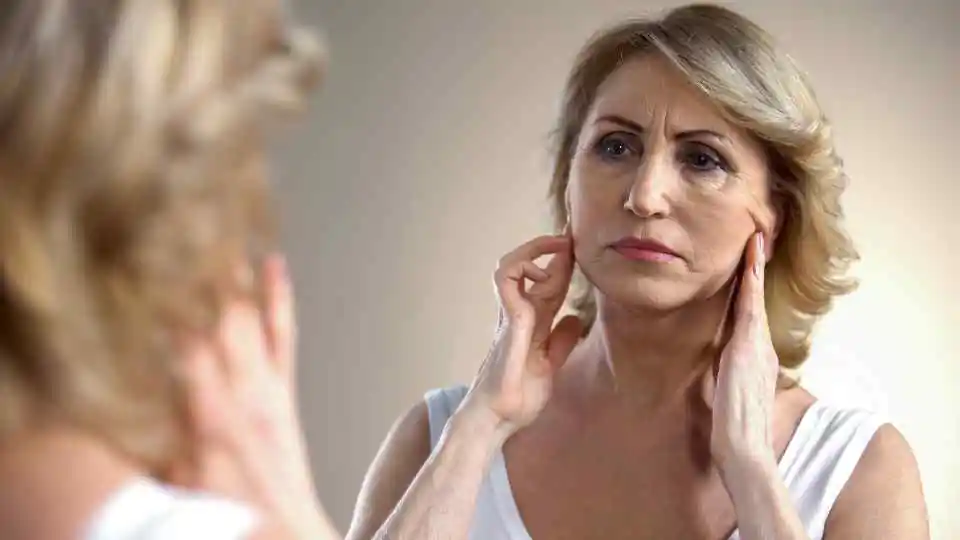
“Ozempic face” isn’t a medical condition. It’s a nickname for the hollow or older-looking face some people notice after losing a lot of weight quickly, on any weight-loss treatment or diet. It happens because fat is lost from the face as well as the body. Losing weight steadily, eating enough protein, staying hydrated and protecting your skin can help.
What is “Ozempic face”?
The term became popular on social media to describe facial changes in people taking semaglutide (the medicine in Ozempic and Wegovy) and similar treatments. People describe:
- hollow cheeks or temples
- more noticeable lines and wrinkles
- sagging skin around the jaw and neck
- looking tired or older
These changes aren’t caused by the medicine damaging your skin. They’re the result of significant weight loss, especially when it happens quickly.
Why it happens
- Facial fat loss: fat pads in the face give it fullness. When you lose weight, you lose some of this fat too.
- Skin elasticity: skin that has been stretched for a long time may not shrink back fully, especially with age, sun damage or smoking.
- Speed of weight loss: fast weight loss gives skin less time to adapt.
- Age: skin naturally produces less collagen and elastin as we get older.
Loose skin on the body
Loose skin can also happen on the stomach, arms, thighs and chest after large weight loss. How much depends on how much weight you lose, your age, genetics, how long you carried the extra weight, and your skin type.
What can help
- Lose weight steadily. Dose increases are spaced out for a reason. You don’t need to rush to the highest dose. Talk to your prescriber if you’re losing weight very quickly.
- Eat enough protein. Protein supports skin and muscle. See our guide to protecting muscle on weight-loss treatment.
- Strength training: building muscle can improve body shape and firmness as you lose fat.
- Stay hydrated and eat plenty of fruit and vegetables.
- Protect your skin from the sun: use SPF every day. Sun damage is one of the biggest causes of skin ageing.
- Don’t smoke, and keep alcohol low. Both affect skin health.
- Skincare: moisturisers and products with retinoids may help skin texture. A pharmacist can advise.
Cosmetic treatments
Some people consider treatments such as dermal fillers, skin tightening or, after large weight loss, surgery to remove excess skin. These carry risks. If you’re considering them, wait until your weight has been stable for several months, and only use qualified, regulated practitioners. Speak to your GP first.
Is it a reason to stop treatment?
For most people, the health benefits of losing excess weight outweigh cosmetic changes. If facial changes are affecting your wellbeing, speak to your prescriber. Don’t stop or change your dose without advice.
Frequently asked questions
Does Mounjaro or Wegovy cause “Ozempic face”?
The medicines themselves don’t damage the skin. Facial changes come from weight loss, which can happen with any treatment or diet.
Is it permanent?
Some fullness may return if weight stabilises, and skin can improve over time. Loose skin after very large weight loss may not fully tighten without treatment.
Does hair loss happen too?
Some people notice temporary hair shedding during rapid weight loss. Hair loss is also listed as a common side effect of these medicines. Speak to your prescriber if you’re worried.
This article is for general information only and is not medical advice.
☑ Clinically Reviewed by Hamza Khairkhwah (GPhC Number 2228294)
A pharmacist reviews the content to help ensure medicines are presented responsibly and that patient facing health information is accurate, appropriate, and aligned with current clinical guidance.
Last reviewed: 23/10/26
Written on behalf of Pills2U by Karan.
Sources and further reading
- MHRA: GLP-1 medicines for weight loss and diabetes – what you need to know
- NHS: Semaglutide
- NHS: Physical activity guidelines for adults


